
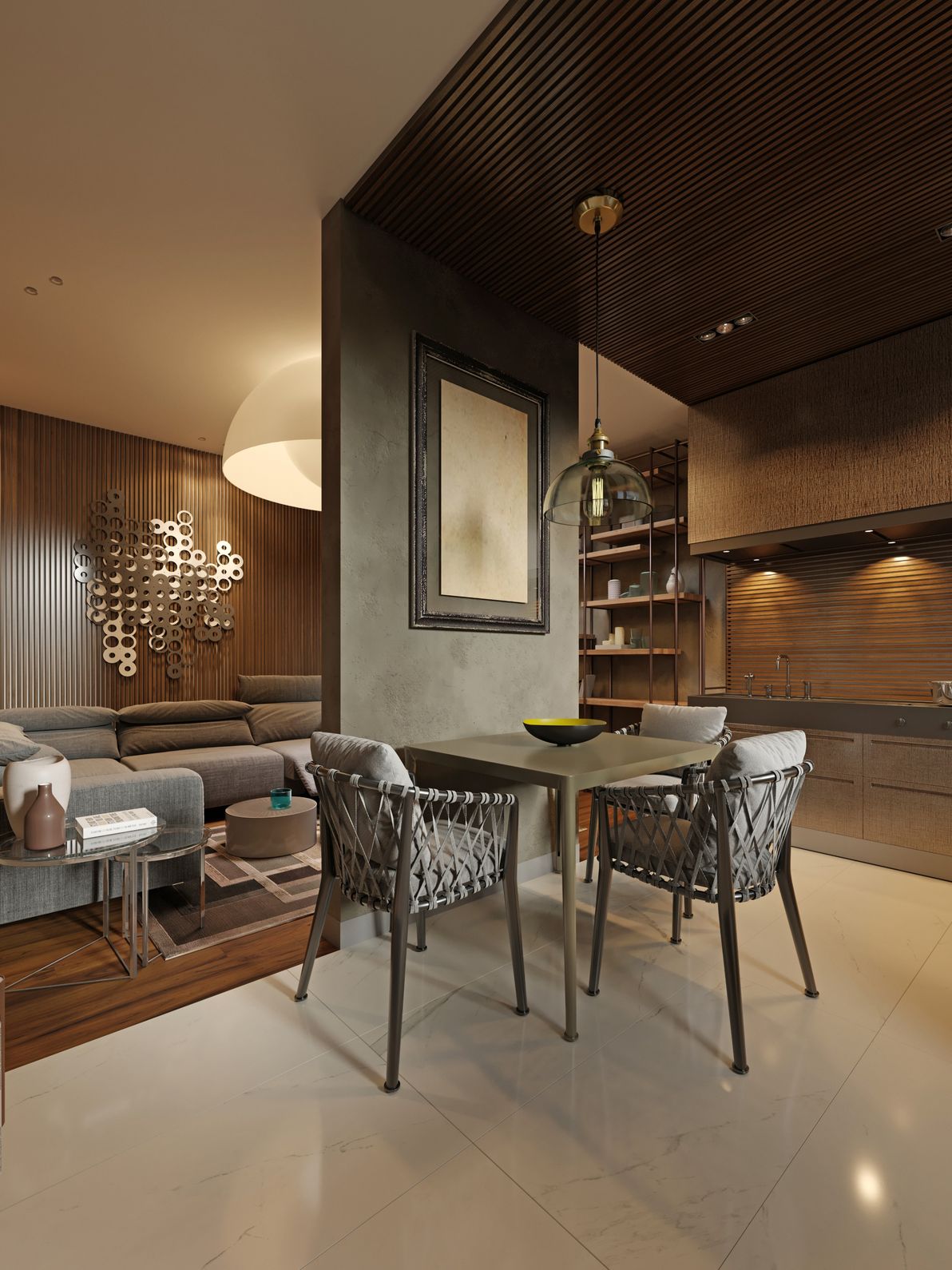
If you've just taken possession of a new apartment in Dubai, or you're looking to transform your villa or office into something that actually reflects who you are, you've probably already realized one thing: finding the right fit-out company is harder than it looks.
There are hundreds of Interior Fit-Out Companies in Dubai. Some are excellent. Some are not. And unfortunately, it's not always easy to tell the difference until you're mid-project, watching deadlines slip and your budget stretch.
We put this guide together for exactly that reason. Whether this is your first renovation or your fifth, we want to give you the knowledge to ask the right questions, spot the warning signs early, and choose a team you can actually trust with your space.
1. What Does an Interior Fit-Out Actually Include?
A fit-out is the process of taking a space from its basic structural state and turning it into something liveable, functional, and finished. It sounds simple, but the scope can vary enormously depending on where you're starting from.
In Dubai, a typical fit-out project can involve any combination of the following:
- Partition walls, drywall systems, and ceiling works
- Flooring and tiling (marble, engineered wood, porcelain, vinyl)
- Painting and decorative wall finishes
- Lighting installation and electrical works
- Joinery, built-in furniture, and millwork
- HVAC, plumbing, and MEP works
- Wallpaper, feature walls, and decorative finishes
Fit-outs are generally broken down into three categories, and knowing which one applies to your project will help you scope it correctly:
Shell and Core: A completely raw space. Structural walls, basic services, no finishes whatsoever. Starting from zero.
Category A: Basic functional finishes are in place. Raised flooring, suspended ceilings, air conditioning, basic lighting. Common in commercial handovers.
Category B: The full build-out. Custom joinery, branding, complete decoration. The space is move-in ready.
2. Before You Call Anyone, Get Clear on Your Own Brief
This is the step most people skip, and it causes more problems than anything else down the line.
When you approach interior fit-out contractors in Dubai without a clear brief, you end up with wildly different quotes, mismatched expectations, and a relationship that starts on shaky ground. Contractors can only give you what you ask for. If you're vague, the quotes will be vague.
Before you pick up the phone, sit down and answer these honestly:
- What is the space going to be used for? A family home, a client-facing office, a retail outlet?
- What condition is it in right now? Raw shell, partially fitted, or needing a full renovation?
- What is your actual budget? Not the number you'd tell a contractor, but the real number.
- When do you genuinely need it finished?
- Do you already have a design concept, or do you need help developing one?
- Are there any permits or approvals needed for this type of work?
The more clearly you can answer these questions, the more useful your conversations with contractors will be. And you'll be much better positioned to compare quotes fairly when the numbers start coming in.
3. Understanding the Dubai Fit-Out Market
Dubai's construction and interiors sector is enormous. There are hundreds of interior contracting companies in Dubai operating across every price point and quality level. Some are multinational firms with rigorous systems. Others are small operations running on thin margins and looser standards.
What makes this market genuinely different from others:
- The pace is intense. Lease start dates, handover deadlines, and investor timelines mean projects often have to move very fast.
- Quality varies dramatically. Two companies quoting the same job can be worlds apart in what they actually deliver.
- Accountability can get blurry. When multiple subcontractors are involved and there's no strong project manager at the center, things fall through the cracks.
- Regulatory requirements are real. Dubai Municipality, RERA, DEWA, and individual building managements all have rules around what can be done, by whom, and with what approvals.
- Communication matters more than people realize. Once a project starts, you need one person who picks up the phone and actually knows what is happening on your site.
The structured, process-driven approach you find in European construction is still relatively rare in Dubai's mid-market fit-out space. When you find a company that operates that way, it makes a real difference to how your project runs.
4. How to Properly Evaluate an Interior Fit-Out Company
Once you have your brief and you've started reaching out, here is what you should actually be looking at when you assess each company.
Are They Properly Licensed?
This should be non-negotiable. Ask to see their Dubai trade licence and confirm they hold the appropriate contractor classification for your type of project. For commercial work, check whether they're registered with the relevant authority (Dubai Municipality, or the free zone if applicable). If a company hesitates on this, move on.
Does Their Portfolio Match Your Project?
A beautiful portfolio is meaningless if the projects in it are nothing like yours. Ask specifically for examples of completed work that's similar to what you're planning, in terms of space type, scale, and finish level. And then ask to speak with the client directly. Any company worth their salt will be happy to arrange this.
Who Is Actually Running Your Project?
This is the question that reveals the most. Ask them directly: who will be your day-to-day contact? Who is the project manager assigned to your site? What does their reporting and communication process look like? You're not just hiring a company, you're hiring the specific team that will show up to your property every day. Make sure you know who that is before you sign.
Is the Pricing Transparent?
A professional fit-out company will give you a detailed scope of work with itemized line items, material specifications, and clear exclusions. If the quote is just a single number with a few broad categories, that's a problem. Vague quotes lead to variations, and variations lead to cost overruns. If it isn't written down, assume it isn't included.
How Do They Control Quality on Site?
Ask them to walk you through their quality control process. Do they have inspection checklists? Who signs off at each stage of the build? What happens when something isn't right? A company with no clear answer to these questions is one that's winging it on site.
5. The Fit-Out Process, Step by Step
Knowing what happens at each stage helps you stay in control and catch problems early.
Stage 1: Briefing and Initial Consultation
You meet, walk the space together, and talk through your vision, your timeline, and your budget. A good contractor will ask a lot of questions here, and they will push back if what you're asking for doesn't match what you've budgeted for. That's a good sign, not a bad one.
Stage 2: Design and Planning
For a full Cat B fit-out, this includes space planning, material selection boards, and 3D visualizations so you can see the space before anything is built. Some interior contracting companies in Dubai handle design in-house. Others work with external designers. Either can work well, but make sure design drawings are finalized and signed off before any construction starts.
Stage 3: Permits and Approvals
Depending on the nature of the work, you may need approvals from Dubai Municipality, DEWA, or your building management. A responsible contractor handles this proactively. If a contractor tells you they'll sort it out later, or that approvals aren't needed when they clearly are, that's a red flag.
Stage 4: Procurement
Materials, finishes, and fixtures are ordered. This stage matters more than most people realize. Confirm that what you approved during the design stage is exactly what's being ordered. Substitutions happen quietly if no one is watching. Get written confirmation on every material specification.
Stage 5: Construction and Execution
The actual build. A well-run site has a clear programme, daily management, and regular updates to you as the client. When you visit, the site should be organized, the trades should be coordinated, and the project manager should be able to give you a clear picture of exactly where things stand.
Stage 6: Snagging and Handover
Before the keys change hands, there should be a formal walkthrough where every defect, unfinished item, and deviation from the approved design is documented. These items need to be fixed before you release the final payment. Do not skip this step or rush through it.
Stage 7: Post-Handover
A professional company is still reachable after handover. Understand the warranty terms upfront. If something fails or a defect appears in the first few weeks, there should be a clear and fast process for getting it resolved.
6. Questions Worth Asking Before You Sign Anything
Use these as your final checklist when you're evaluating your shortlisted companies:
- Can I see your trade licence and contractor classification documents?
- Who will be my dedicated project manager, and can I meet them before we start?
- How do you manage subcontractors and ensure quality across different trades?
- Walk me through how you handle scope changes once the project is underway.
- What's specifically excluded from this quote? What would trigger additional costs?
- Can I visit one of your active sites or speak with a client from a recently completed project?
- What is your process if the project runs behind schedule?
- What warranty do you offer on the completed works?
7. Red Flags That Should Make You Walk Away
Trust your instincts, but also look for these specific warning signs:
- No written contract, or a contract so vague it could mean almost anything
- Full payment requested upfront before any work begins
- No named project manager assigned to your project
- A quote that's dramatically lower than everyone else's, with no explanation of why
- No verifiable references from completed projects in Dubai
- Slow or inconsistent communication before you've even signed. It will only get worse once they have your money.
- Silence around permits, approvals, or regulatory compliance
8. What Should You Budget For?
Fit-out costs in Dubai vary a lot depending on the quality of finishes, the complexity of the scope, and the size of the space. These figures are meant as a general guide, not a quote:
- Basic residential renovation: AED 250 to 400 per sq ft
- Mid-range residential fit-out: AED 400 to 700 per sq ft
- Premium residential: AED 700 to 1,200+ per sq ft
- Commercial Cat A: AED 150 to 300 per sq ft
- Commercial Cat B: AED 300 to 600+ per sq ft
These numbers will shift depending on your specific materials, site conditions, and the scope of MEP works involved. Always ask for an itemized breakdown rather than a total sum. And set aside a contingency of at least 10 to 15 percent for things that come up during the build. They always do.
Don't forget to factor in design fees, permit costs, and furniture procurement if those aren't included in your fit-out contract.
9. Why the Standard You Choose Matters
There are a lot of interior contracting companies in Dubai. Most of them will tell you they do quality work. The ones that actually do are the ones that can show you how: through their process, their people, their past projects, and their willingness to put everything in writing.
At Swissora, we built the company around the standards we know from Swiss construction. That means structured planning before a single wall goes up, transparent pricing with nothing hidden in the fine print, a dedicated project manager on every job, and honest communication throughout.
Our founder Emin Istrefi spent over 20 years in the Swiss construction industry managing complex interior projects from start to finish. He brought that same discipline to Dubai because he saw how much it was needed here.
We work with homeowners, investors, and businesses who are done with the guesswork. People who want to know exactly what they're getting, who is responsible for it, and what happens if something isn't right.
If that sounds like the kind of partnership you're looking for, we'd be glad to have an honest conversation about your project.
Frequently Asked Questions
Q1. How long does an interior fit-out take in Dubai?
Most apartment fit-outs in Dubai take between 6 to 10 weeks once work starts on site. A villa or full commercial space can take 3 to 6 months depending on the complexity. The timeline is rarely the problem. What causes delays is poor planning before the build begins. When designs are locked, materials are approved, and permits are in place before day one, projects move smoothly. Always ask your contractor for a written programme with milestones, not just a rough estimate.
Q2. Do I need a permit for interior fit-out work in Dubai?
For most structural changes, partition works, or anything touching electrical and plumbing systems, yes, a permit is required. Dubai Municipality oversees most buildings, while free zones have their own approval process. Even smaller jobs like moving a partition wall often need building management sign-off. A serious interior fit-out contractor handles all of this as part of the job. If someone tells you permits are not needed when the work clearly requires them, that is a contractor to avoid.
Q3. What is the difference between a fit-out and a renovation?
A fit-out means building a space from scratch or from a bare shell, making it functional and finished for the first time. A renovation means improving or updating a space that already exists. In Dubai, most projects are actually a combination of both. You might be stripping back an old apartment and rebuilding it entirely, which touches both definitions. What matters most is being honest with your contractor about the current condition of the space so they can scope and price it accurately.
Q4. How do I avoid hidden costs in a fit-out project?
Start by demanding a fully itemized quote, not a single lump sum. Every trade, material, and finish should be listed with a clear specification. Ask the contractor directly what is excluded, not just what is included. Build in a contingency of 10 to 15 percent because unexpected things always come up on site. Tie your payment schedule to completion milestones, not calendar dates. And do not release your final payment until every item on the snagging list has been fixed and signed off.
Q5. Can I live in my apartment during a fit-out?
For very minor works, it is possible. For a full fit-out, we strongly recommend you do not. Dust from cutting and drilling gets into everything. Paint and adhesive fumes are a genuine health concern, especially in enclosed spaces. Workers need full access across all areas, and having a resident on site slows the pace considerably. Most clients in Dubai arrange a short-term rental for the duration. Your contractor should give you a clear timeline upfront so you can plan your living situation properly.
Q6. What should be included in a fit-out contract?
A solid fit-out contract should cover the full scope of work, all materials and finishes with exact specifications, a project timeline with clear milestones, a payment schedule tied to those milestones, a process for handling any changes to scope, warranty terms on all completed works, and what happens if deadlines are not met. If any of these are missing, ask for them before signing. A contractor who resists putting details in writing is telling you something important about how they operate.